

Why Choose Us
One-stop Solution:
We provide perfect OR room solution,medical equipment solution and ICU monitor and therapy solution!
Competitive price:
Due to we are direct manufacturer,we can quote you our best price.
Professional Manufacturer:
The leading brand and the largest professional medical manufacture in China,with first and only one AI intelligent digital workshops and stock control in China.
Custom Service:
We accept your oem,with advanced ai intelligent stocks and workflows,we provide your the most professional and quickest delivery with 0 after service problem!
What is Surgical Light
Surgical lights,also known as surgical lighting or operating lights, are mainly used in hospital operating rooms and ambulatory surgery centers,but can also be used in various locations throughout the facility to provide high quality lighting for procedures.examples include emergency rooms,labor and delivery, examination rooms, and anywhere where procedures are completed.they are used by clinicians, surgeons and proceduralists.a surgical light illuminates the operative site on a patient for optimal visualization during a procedure.an examination light is used during medical exams,while operating room lights are used during surgical procedures.
-

OT Light LED
YDE500/700 OT light light is a modern advanced operating light. Double Dome Ceiling Mounted Surgical light, single head operating light, produced by YUDA medical group, the largest medical Add to Inquiry -
Carbon Fiber OT Table Traction Frame
YUDA new made carbon fiber OT table traction frame supports hip hyperextension/abduction/adduction/rotation.It is a specialized operating table attachment designed for precise lower limb traction and Add to Inquiry -
Gooseneck Exam Lamp
12W LED Medical Gooseneck Exam Light Surgical Examination Lamp with 360° Adjustable Illumination, could be customized for bulk tenders. Add to Inquiry -
LED Surgery Lamp
LED Operating Lamp, LED surgery lamp, made by YUDA medical. The Future of Surgical Lighting Technology. Add to Inquiry -
Mobile Examination Light
By using German Osram LED beads, with single 1 W, each 20 LED,YDE300 is an environment friendly minor surgery lamp, examination lamp. It is an economic type to us for outpatient, clinical, hospitals, Add to Inquiry -
Medical Led Clinic Operating Lamp
YDE500 single head medical LED Clinic Operaitng Lamp is an ideal economic type for mobile surgery operations,made by Shandong Yuda Health Technology Co., Ltd. Add to Inquiry -
Operation Theatre Lights
YDE500/700 operation theatre lights single head medical operating lamp is a new designed LED surgical light, it adopts new LED lighting shadow eliminate technology and LED lighting overlay tech, with Add to Inquiry -
Led Surgical Light
2026 New Model Double Dome Ceiling Mounted Electric Surgical Operating Shadowless Exam Theatre Operation Room Light High CRI 97 Add to Inquiry -
Medical led surgical light
YUDA medical--clinic outpatient, hospital, military, operating lamp. • LED technology. • Strong reading and maintenance light in warm cold light (3,500 K-5,500K), night light in amber. • ON / OFF Add to Inquiry -
LED Clinic Operating Light
This is new improved version YDE700/500 Ultra-thin LED clinic operating light for medical LED shadowless double head surgical lamp. Add to Inquiry -
Advanced LED Operating Light
Advanced LED Lights manufactures quality Full Spectrum Grow Lights. Let's buy from German technology with China leading oeprating room professional manufacture.Significantly improved color Add to Inquiry -
Minor Surgery Shadowless Lamp
Find your surgical light easily amongst YUDA medical Operating room products from the leading brands. We produced series of surgical shadowless lamps use innovative LED light sources. LIGHT YDE300 Add to Inquiry




Benefits of Surgical Light
No stroboscopic:
Because the led shadowless lamp is powered by pure dc,there is no stroboscopic,it is not easy to cause eye fatigue,and it will not cause harmonic interference to other equipment in the work area.
Uniform illumination:
Using a special optical system,360°uniformly illuminates the observed object,no phantom,and high definition.
Long lifespan:
The average lifespan of led shadowless lamps is long (35000h),which is much longer than that of annular energy-saving lamps (1500~2500h),and the lifespan is more than ten times that of energy-saving lamps.
Energy saving and environmental protection:
Led has high luminous efficiency,impact resistance,not easy to break,no mercury pollution,and the light it emits does not contain radiation pollution of infrared and ultraviolet components
What are the Applications of Surgical Light
Operating light are lighting devices used primarily in surgery.these lamps provide a homogeneous light,without shadows,on the area to be operated on,to help doctors accurately and consistently assess and interpret tissue and vessel appearance.


Types of Surgical Light
According to the type of light source, it can be divided into halogen operating light and led operating light.the luminous principle of halogen lamp is the energy conversion of electricity heat light.that is,heating after the electricity through the filament, then generate light. this light-emitting method has low efficiency and high temperature. led lamp is a cold light source,it is a direct electro-optical conversion, low energy consumption,real cold light surgical lighting.
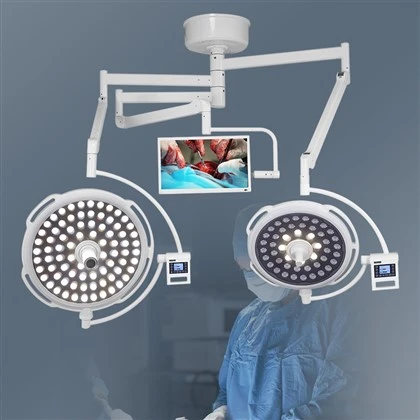
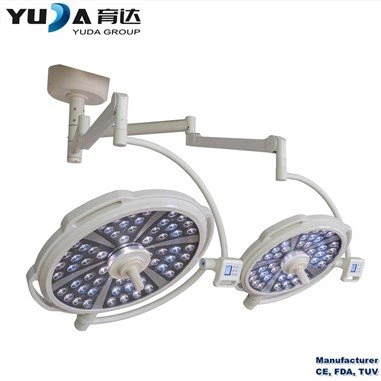
According to the functional requirements,it can be divided into single head,double head and multi-head operating light,also operating light with camera system etc. double head operating light have become the first choice for most hospital operating rooms,one lamp head as the main light,providing the main illumination,another light head as an auxiliary light to provide auxiliary lighting, to make up for the blind spot of the main light. in addition,it can also provide backup lighting in the first instance, when there is a problem with the main light.
Material of Surgical Light
The main raw materials of surgical light include cold-rolled steel plates,cold-rolled steel pipes and engineering plastics.


Features of LSurgical Light
Shadow control,cold light,multi-reflective system design,make sure the surgical area is shade-free;equipped with cold light filter and cold light reflector to minimize heat radiation.
Lightweight structure,wide range of adjustment,stability,with removable light handle,operators can easily adjust the lighting needed for surgery by adjusting the light handle and central control panel.
The shape of lamp conforms to the requirements of laminar flow purification operating room,which ensures the convection circulation of purified air in operating room,and keeps the surgical area sterile.
realistic light color,close to natural light.it's easy to identify the smallest differences in tissue and reduce eye strain for surgeons.
Components of Surgical Light
01/
Lamp head: The lamp head directly provides almost shadowless lighting to the operating area,or we can understand it as a light source. according to different working principles,manufacturers on the market have designed lamp heads in various shapes,and some have other functions.
02/
The rotating arm: Is a component that connects the upper mounting fixture (lamp holder) and the lower spring arm,including the central axis and the rotating cross arm on the central axis.it can rotate 360 degrees,greatly increasing the horizontal working area of the lamp.
03/
Spring arm: Used to balance the lamp head so that it can be accurately positioned at any designated position and increase the horizontal,upper and lower working area of the lamp head.by pulling the spring arm and the bent joint of the lamp head,the lamp head can be moved up and down and axially rotated at will.
04/
The installation fixed component: Is generally designed in the shape of a long hanging pipe,with a flange structure connected to the end,and the flange structure is connected to the hidden part of the ceiling space.the other end of the drop tube extends from the ceiling and connects to the swivel arm.
How to maintain Surgical Light
Regularly check the main body of the operating light,each function button and joint loosening condition.
Check the damping of the light regularly to avoid the drift of the lamp head and arm
Check the spring strength of the operating light regularly to avoid the phenomenon of insufficient elasticity or elastic overload.
Annual inspection should be carried out by licensed engineer,and any problems shall be reported to the equipment department or manufacturer in time for repair.
certificate
CE with globally exporting support---TUV, NQA, FDA, Russia CE

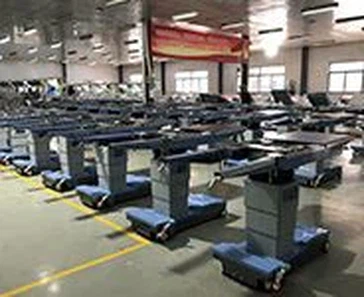
Presentation of cooperation cases


FAQ
Q: What are surgical lights made of?
A: The filament is usually made of tungsten. The type and proportion of gas in the bulb varies. Incandescent lights do not last as long as LED lights and they may need to be replaced during a surgical procedure.
Q: What are hospital lights made of?
A: LEDs contain no mercury, and unless they're specifically UV bulbs, they emit very little to no UV radiation, so they are perfect as hospital lights. These two factors alone make them a better choice for health care facilities than other types of lighting.
Q: What light is used in surgery room?
A: LED or Xenon lamps are used to maximise light diffusion without creating a lot of heat. These lights are crucial to a good outcome, as they create the basis of illumination for the surgeon.
Q: What is the light source in surgery?
A: Modern surgical lights use halogen lights, xenon lights, metal halide lights, or light-emitting diodes (LEDs) as their light source.
Q: What type of lights are hospital lights?
A: With the developments in LED lighting, most manufacturers of Surgical lighting fixtures have standardized on the use of LED Lighting in their surgical lighting fixtures.
Q: What metal are lights made of?
A: Incandescent bulbs typically use a tungsten filament because of tungsten's high melting point. A tungsten filament inside a light bulb can reach temperatures as high as 4,500 degrees Fahrenheit.
Q: What are medical lights?
A: Medical lighting helps to illuminate the subjects true color more accurately than that of bulb lights and has the added benefit of multiple arrangements of small light sources fixed at different angles to aid in shadow reduction for a more consistent surgical light.
Q: What type of light do doctors use?
A: Surgical bulbs differ from standard incandescent ones in that they put off less color and produce a higher level of “whiteness.” This increases the level of clarity in the illuminated area. There are many different types of bulbs used in surgical lighting. The two most prominent are halogen and LED lights.
Q: Is UV light used in surgery?
A: Exposure to UVC light reduces dangerous microorganisms. The proper dosage of UVC light – for a specific length of time and intensity – can be used to quickly and efficiently disinfect targetes areas of operating rooms and other high-traffic spaces within an operating/procedure room.
Q: What color is surgical light?
A: Lower color temperatures emphasize the reds, while higher temperatures provide a cool white light. The “green mode” is more suitable for minimally invasive surgical procedures. Applications: Medical lighting for hospitals, clinics, minor surgery rooms, examination rooms, and diagnostic facilities.
Q: What kind of light is used in laparoscopic surgery?
A: LED Light Source is used in all endoscopic and Laparoscopic procedures.
Q: What are surgical lights called?
A: A surgical light also referred to as an operating light or surgical lighthead – is a medical device intended to assist medical personnel during a surgical procedure by illuminating a local area or cavity of the patient.
Q: What material is used for surgical light?
A: The main raw materials of Surgical Light include cold-rolled steel plates, cold-rolled steel pipes and engineering plastics.
Q: What is the use of surgical light?
A: The primary function of surgical lighting is to illuminate the operative site on and/or within a patient for ideal visualization by OR staff during a surgical procedure. With proper lighting, operating room staff can achieve a higher level of efficacy during surgery and reduce the risk of complications.
Q: Is surgical light a medical device?
A: Surgical lights are medical devices designed to effectively illuminate the patient's body during surgical procedures, diagnostics, or treatments. These lights must follow a strict set of specifications to ensure efficient and effective illumination that leads to improved visibility and better patient outcomes.
Q: What type of light do doctors use?
A: Surgical bulbs differ from standard incandescent ones in that they put off less color and produce a higher level of “whiteness.” This increases the level of clarity in the illuminated area. There are many different types of bulbs used in surgical lighting. The two most prominent are halogen and LED lights.
Q: What are the main characteristics of a surgical light?
A: Adjustability and Ergonomics: Surgical lights should offer flexible adjustments, including color temperature, intensity, and focusability. Comfortable and easily accessible controls, tailored to the surgeon's preferences, contribute to optimal performance during procedures.
Q: Why are operating room lights green?
A: The presence of green light reduces the afterimage effect experienced by surgeons and eliminates monitoring equipment glare while illuminating the space for supplemental staff.
Q: What are the sources of surgical lights?
A: This provides the surgeons and the surgical team with a highlighted view of the surgical site. Modern surgical lights use halogen lights, xenon lights, metal halide lights, or light-emitting diodes (LEDs) as their light source.
Q: Why are surgical lights different Colours?
A: Surgeons need to distinguish different tones of flesh colors while preforming surgery, if the light were to have tones of red, blue or green it can be misleading, and change the appearance of the patient's tissues. Being able to see the flesh tone clearly is vitally important to their work and patient safety.
