

Why Choose Us
One-stop Solution:
We provide perfect OR room solution,medical equipment solution and ICU monitor and therapy solution!
Competitive price:
Due to we are direct manufacturer,we can quote you our best price.
Professional Manufacturer:
The leading brand and the largest professional medical manufacture in China,with first and only one AI intelligent digital workshops and stock control in China.
Custom Service:
We accept your oem,with advanced ai intelligent stocks and workflows,we provide your the most professional and quickest delivery with 0 after service problem!
What is Surgical Table
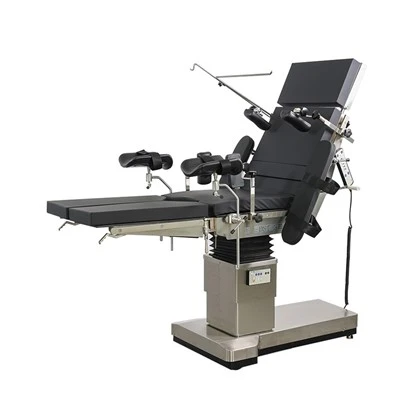
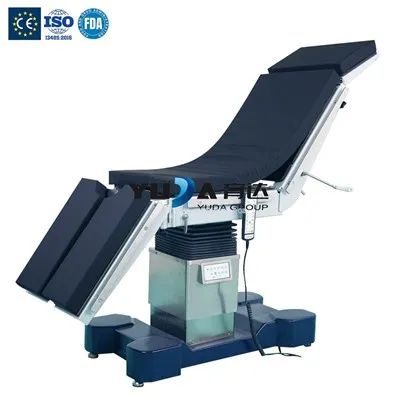
An operating table is a table on which a patient lies during a surgical procedure. sometimes known as a surgical table or operation table,operating tables are typically used within an operating room or surgical suite of a hospital,ambulatory surgery center,or other healthcare facilities where surgeries are performed.operating tables may be either stationary or mobile to move room to room.
-

Hydraulic Surgery Table
De---produced by YUDA MEDICAL GROUP. It is an amazing advanced integrated operating table. Application of modern technology, German Dunkeron motor and Taiwan Hydraulic transmission workflow, combined Add to Inquiry -
Electro Hydraulic Surgical Table With CE
Electric Powered support OEM/ODM hydraulic orthopedic operating table surgical bed general surgery OT table manufacturer, since 1992. Add to Inquiry -
Operating Orthopedic Traction Frame
Made of carbon fiber with X-ray translucency, the traction frame is compatible with X-ray and C-arm systems. It fulfills the extension and traction demands of different leg orthopedic procedures, and Add to Inquiry -
FDA Approved Electric Operating Table
YUDA medical new Apha series GM-700Q electric surgical table, featuring Maquet similar design with customized function. Its new improved advanced outlook on base exudes a magnetism of ergonomic and Add to Inquiry -
Maquet Surgical Orthopedic OT Table
Designed for a variety of surgical applications, the YUDA Medical DST- 700Q is a high-end electric general orthopedic surgical table that excels in patient positioning, 300kg load-bearing capacity, Add to Inquiry -
C-arm Table For ERCP
YUDA Made fluoroscopic table is a specialized medical table with a radiolucent top, designed for use with C-arm X-ray machines to provide real-time, guided imaging during minimally invasive Add to Inquiry -
Electric Five Function Operation Table
Hybrid Electric 5-Function Operating Table,DST-1A improved electric five function OR table, made by YUDA medical group. Since 1992. Add to Inquiry -
YUDA Motorized Operating Table
DST-1A new improved double controller, electric seven function. Engineered for the modern surgical suite, the YUDA Motorized Operating Table redefines procedural excellence through intelligent design Add to Inquiry -
Bariatric Electro Hydraulic Surgical Table
DST-800A has 650mm-1100mm (450mm lifting route), and 300mm horizontal sliding route.Trendlenburg tilt range 30°, right and left inclination angle 0-25°, standard flex and reflex function. Heavy load Add to Inquiry -
Electric Hydraulic Operating Table
DST-800A a YUDA medical group new made electric hydraulic universal operating table, it features for heavy load to 340KG(750lbs), with a new designed C-arm accessable stainless steel base, it could Add to Inquiry -
Electric Lifting Surgeon Chair
YUDA medical new produced customized modern battery operated microscope and eye surgery sue 304 stainless steel electric doctor surgeon chair for operating table use. Add to Inquiry -
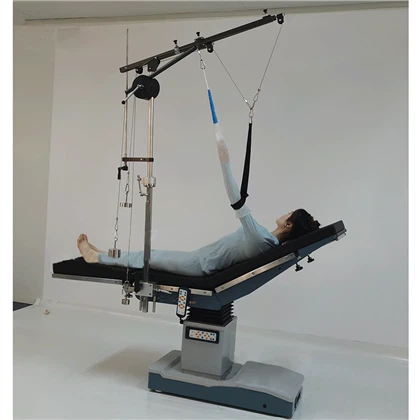
Shoulder Surgery Traction Device
YUDA medical produced operating table accessories. This shoulder surgery traction device can be matched up to upper limb surgery for orthopedic traction use. Add to Inquiry




Benefits of Surgical Table
01/
Accessibility: Doctors need the ability to adjust the height in order to gain access to the patient comfortably.angle adjustment capabilities can also help the doctor reach the surgical area more comfortably and safely.
02/
Stability: Positioning placement and precision are critical to delivering the right dosage of anesthesia.therefore the surgical table must be steady and cannot sway or move if the patient's shift positions.
03/
Imaging support: Surgeons are increasingly using minimally invasive laparoscopic procedures,making imaging support more important.a general surgical table should include imaging support features.
04/
Support for larger patients: One of the realities of 21st-century surgery is an increased rate of obese patients.quality surgical care shouldn't be limited by the maximum weight allowances of surgical tables. the standard table should, at minimum,be able to support a patient weighing 300 pounds (136 kg).
What are the Applications of Surgical Table
General surgery: General surgery is the basis for many treatments.
Gynaecology/urology: Gynecologic and urology surgery is an important surgical field in many hospitals.in this field schaerer medical offers a wide range of general and specialized accessories for safe patient positioning and ideal working environment for the surgeons and the staff.
Ortho/traumatology: Orthopaedic/traumatology surgery has versatile functions and an easy handling.
Ambulatory surgery/ent/ophthalmology: Ambulatory surgery,day surgery, outpatient surgery has often a different need for ot-tables and accessories than regular ot rooms.we do offer customized solutions for this growing area of treatment.
Types of Surgical Table
1

General operating table:
This type of table is the most commonly used and is designed for a wide range of surgical procedures.
2
Orthopedic operating table:
This type of table is designed for orthopedic surgeries and has a range of specialized attachments and positioning options to facilitate the surgeon's work.
3
Neurosurgical operating table:
This type of table is designed for neurosurgery procedures and has specialized features such as cranial stabilization and headrests.
4
Urological operating table:
This type of table is designed for urological surgeries and has specialized attachments and positioning options to facilitate the surgeon's work.

Material of Surgical Table
Surgical tables are constructed with stainless steel and high quality materials to provide durability and long operating life.
Features of Surgical Table
Built-in bridge,conveinent for back surgery,kidney,cervical and lumbar surgery.
Electric control for lifting up and down,trendlenburg and anti trendlenburg,right and left tilt.movement is stable and no noise.
Mattress is high-moulded pv foamed,thickness is≥50mm,anti-water,good air permeability and static-free.
Horizontal movement comes to 300mm (11.8in)


Components of Surgical Table
An operating table system is basically made up of three components: an operating table column,the table top and the transporter.
How to maintain Surgical Table
Always use caution when moving or handling operating tables.they are heavy and unwieldy,and can easily be damaged if not handled properly.
When cleaning operating tables,use only mild soap and water. avoid harsh chemicals or abrasive cleaners,as they can damage the table's surface.
Inspect operating tables regularly for signs of wear or damage.if any problems are found,repair or replace the affected parts as soon as possible.
Do not store near chemicals or other corrosive materials.

certificate
CE with globally exporting support---TUV, NQA, FDA, Russia CE

Presentation of cooperation cases


FAQ
Q: What is a general surgical table?
A: Sometimes known as a surgical table or operation table, operating tables are typically used within an operating room or surgical suite of a hospital, ambulatory surgery center, or other healthcare facilities where surgeries are performed. Operating tables may be either stationary or mobile to move room to room.
Q: What is the basic operating table?
A: A surgical table helps to keep a patient in place throughout a procedure. The surgical team can effectively operate on the still patient. The team can move parts of the patient's body using surgical table accessories. It allows easier access to the surgical site.
Q: What size is the operating table?
A: Standard operating tables are the most versatile and can be used for a wide range of surgeries. They are typically between 72 and 78 inches long and 30 inches wide. Bariatric operating tables are designed for larger patients and can accommodate patients up to 700 pounds.
Q: What is in a surgical tray?
A: The Hand Tray includes a wide range of hand tray instruments. It contains various tools such as retractors, scissors, forceps, and many more.
Q: What are the features of operating table?
A: The decision to use a certain operating table over another depends on patient risk factors, positioning abilities, type of procedure, and length of procedure. Some features of good surgical tables include versatility, ease of use, reliability, generous weight and height restrictions, and accessory capabilities.
Q: What are the components of operating table?
A: An operating table system is basically made up of three components: an operating table column, the table top and the transporter. Modern operating table systems are available as both stationary and mobile units.
Q: What is the basic operating table?
A: A surgical table helps to keep a patient in place throughout a procedure. The surgical team can effectively operate on the still patient. The team can move parts of the patient's body using surgical table accessories. It allows easier access to the surgical site.
Q: How big is a surgery table?
A: Standard operating tables are the most versatile and can be used for a wide range of surgeries. They are typically between 72 and 78 inches long and 30 inches wide. Bariatric operating tables are designed for larger patients and can accommodate patients up to 700 pounds.
Q: Why the operation table is at the centre of the surgery?
A: The operating room table is positioned to provide maximum space for the attached hand table, minifluoroscope, operating surgeons, surgical technicians, instrument table, circulating nurses, and anesthesia personnel.
Q: What are the different types of operating rooms?
A: Operating rooms are designed to meet the unique needs of a hospital or population it serves. There are three types of operating rooms: digital, hybrid, and integrated. Digital operating rooms are built around central data systems that integrate imaging, software, and video data systems.
Q: How much weight can a surgery table hold?
A: Standard features of our Bariatric table series include: Cantilevered, diving board style design offers provider easy C-arm access. 1,000 lbs patient capacity.
Q: What is a fracture table in surgery?
A: Fracture tables and trauma tables are designed to allow the surgeon to perform common orthopedic procedures such as hip and pelvic fractures, tibial and fibula fractures, anterior approach total hip arthroplasty (AATHA), also known as the direct anterior approach, hip arthroscopy, thoracic and lumbar spine and more
Q: How does a Surgical Table work?
A: The overbed table should be installed at a comfortable height for the user. To raise the table top, place your hand underneath the table top and move it upward to the desired height. Remove hand pressure to set height. To lower the table top, lift the release lever and push the table top downward to the desired height.
Q: What is the purpose of the preparation of the operation table?
A: The purpose of a surgical table is to keep the patient in place while the surgical team operates, and may move various parts of the body using surgical table accessories for easier access to the surgical
Q: What are the advantages of modern OT table?
A: Providing a stable and secure platform for surgical procedures: OT tables are specifically designed to provide a stable and secure platform for surgical procedures, helping to reduce the risk of complications and improve patient outcomes.
Q: Is an operating table a medical device?
A: Operating tables and accessories and operating chairs and accessories are AC-powered or air-powered devices, usually with movable components, intended for use during diagnostic examinations or surgical procedures to support and position a patient.
Q: What is the history of operating tables?
A: In ancient and medieval times, wood was the material used to produce the OT tables and chairs. Wood remained in use until the 20th century. The tables looked more like benches, but gradually accessories were added to the benefit of both the surgeon and the patient.
Q: How should the patient be secured to the operating room table?
A: Body restraints are used to safely secure the patient to the operating table. Keeping the left leg straight, the patient will slide the left hip back and bend the right leg. This type of position allows acces
Q: How long are operating tables?
A: Since there are different models of operating room tables, there are some variations in the basic measurements. However, in general, most of the various operating room table measurements will range between 20 and 24 inches in width and up to 83 inches in length.
Q: Why the operation table is at the centre of the surgery?
A: The operating room table is positioned to provide maximum space for the attached hand table, minifluoroscope, operating surgeons, surgical technicians, instrument table, circulating nurses, and anesthesia personnel.
