

Why Choose Us
One-stop Solution:
We provide perfect OR room solution,medical equipment solution and ICU monitor and therapy solution!
Competitive price:
Due to we are direct manufacturer,we can quote you our best price.
Professional Manufacturer:
The leading brand and the largest professional medical manufacture in China,with first and only one AI intelligent digital workshops and stock control in China.
Custom Service:
We accept your oem,with advanced ai intelligent stocks and workflows,we provide your the most professional and quickest delivery with 0 after service problem!
What is Hospital Vital Sign Machine
A vital signs monitor measures the basic medical indicators of health temperature, pulse,breathing, and blood pressure. most monitors can store and record thousands of pieces of information. many portable types feature a touch screen and a handle, as well as a backup battery supply.
-

Hospital Vital Sign Machine
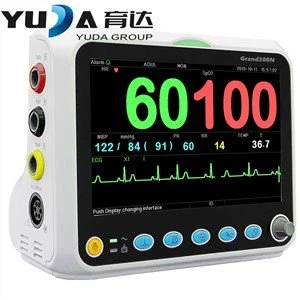
Transform your clinical workflow with Grand300N. It is a vital sign patient monitor can be used on emergency transfer. Its multiparameter monitor integrates with its networked medical-grade Add to Inquiry -
Hospital Life Monitor
Now you can streamline workflow and support patient safety with a single monitor that accompanies the patient from admission to discharge. The ergonomic Grand300N provides continuous monitoring at Add to Inquiry -
Vital Sign Patient Monitor
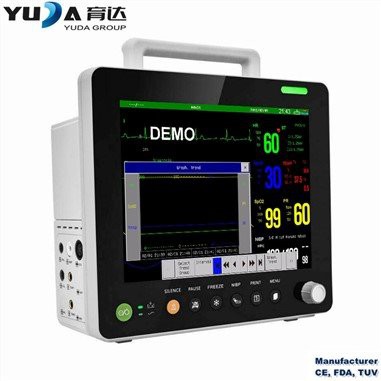
Vital sign patient monitor--- 7 inches, 8.4 inches, 9 inches, produced by YUDA Medical Group. We have dedicated on 10 years, with the engineers from Mindray and GE, Grand have successfully made out a Add to Inquiry -
Monitoring Machine In Hospital
YUDA medical is the largest medical manufacture in North Chin. It is since 2012 year, YUDA begin to research and development the patient monitor series, it is on 2015 year we begin bring YUDA made Add to Inquiry -
Advanced Bedside Patient Monitor
Healthcare medical device , made by YUDA and GRAND, medical group joint research an development patient montior series are strong on its technology, we have a strong engineer team in Shenzhen office. Add to Inquiry -
Medical Device Patient Monitor
Portable Dental Oral implant Patient Monitor is adaptable to adult, pediatric and neonatal usage.It can be used in oral implant surgery. It can monitor and measure human body's vital signs in real Add to Inquiry -
Surgical Equipment Patient Monitor
Buy high technology strong famous brand for patient monitor. The YUDA & Grand made Patient monitoring refers to the continuous observation of repeating events of physiologic function to guide therapy Add to Inquiry -
Industrial Patient Monitor
The 15 inches multi-parameter patient range of monitors, for fixed bedside or portable patient monitoring. Produced by YUDA& Grand Medical joint research and development.Patient monitor of 26 years Add to Inquiry -
Hospital Device Patient Monitor
As a health care provider, YUDA medical has been 31 years. It is since 2012 year we begin to produce patient monitors, but when Grand Medical group comes in, we can do better with engineers come from Add to Inquiry -
Advanced Patient Monitor
Shandong Grand& YUDA Medical Group patient monitor series with engineers comes from Mindray and GE, by using 10 years, our patient monitor series are combined by YUDA and GRAND group. we have a Add to Inquiry -
Medical Equipment Patient Monitor
Patient Monitoring Equipment for Health Care Facilities Worldwide. Patient monitors. Anesthesia systems. Capnography monitoring equipment. Pulse oximeters. Remote patient monitoring equipment. Add to Inquiry -
Multi-parameter Patient Monitor
It is since 2012 year, YUDA begin to research and development the patient monitor series, it is on 2015 year we begin bring YUDA made patient monitor to our medical exhibitions. In 2019 years, with Add to Inquiry



Benefits of Hospital Vital Sign Machine
01/
Monitoring Trends and Identifying Changes: Vital signs spot monitors enable healthcare professionals to monitor trends in a patient's vital signs over time. They can identify any significant changes or abnormalities by comparing current measurements with previous readings.This helps in the early detection of deteriorating conditions and can assist with confirming a diagnosis.
02/
Portability and Versatility: Vital signs spot monitors are designed to be portable and lightweight,making them easy to manoeuvre and set up in various clinical environments.They are suitable for use in different healthcare settings,such as hospitals,clinics,emergency rooms, and home healthcare.The ability to move the monitor to the patient's bedside or different locations within a facility improves workflow and patient care.
03/
Accuracy and Reliability: Spot monitors are equipped with advanced technology that ensures accurate and reliable measurements.They are calibrated to provide precise readings of vital signs,helping healthcare professionals make informed decisions regarding patient care. Accurate vital sign measurements are crucial for monitoring patient condition,identifying changes,and determining appropriate interventions.
04/
Time-Saving: Healthcare professionals can obtain multiple readings within a short period,reducing the time spent on each patient assessment.This allows them to allocate more time for other important tasks and deliver efficient care.
What are the Applications of Hospital Vital Sign Machine

ICU patient monitoring:
Hospital vital sign machine are also useful in the intensive care unit (icu) where patients require continuous monitoring of their vital signs. in the icu, patients are often connected to multiple devices that monitor various vital signs, making it challenging for clinicians to keep track of everything simultaneously.

Home healthcare:
Another crucial application of hospital vital sign machine is in home healthcare. as technology advances,the healthcare industry is moving towards more personalized care, making portable patient monitors a perfect fit for home healthcare. patients with chronic conditions who require continuous monitoring of their vital signs can use portable patient monitors.
Types of Hospital Vital Sign Machine
General vital signs monitors:
Signs monitor machine provides pulse oximetry, temperature and blood pressure readings. touch screen monitors with minimal knobs are designed for efficient cleaning. bright colors on screen make reading easy, improving workflow.the intuitive designs are helpful during orientation and training.
Eeg and vital signs monitors:
The monitor specifically monitors blood pressure ranges, oxygen in the blood,heart rate,and strength.these are more commonly used in specialized heart clinics or for specific patients when they are complaining about chest pains.
Eeg ekg nibp monitors:
The monitor is a combination machine designed to monitor heart patients who may require longer-term oversight,especially for those in critical condition.
Fetal monitors - vital signs monitor for babies:
Common in prenatal care facilities, fetal monitor effectively monitors a single baby or twins.fetal heart rates are monitored using technology which simultaneously integrates electronic medical records in real time.
How to Use a Hospital Vital Sign Monitor?
To use a hospital vital sign monitor, your biomedical engineering team will calibrate it annually to ensure accuracy.then you just need to apply the sensors and after that, all you are able to do is monitor the vital signs.if the monitor is integrated into the electronic medical record, the data will automatically flow into the record,otherwise, the values need to be manually entered into the patient's record.

Features of Hospital Vital Sign Machine
Large digital LED color display
Printing capability option
Measures and displays heart rates
Blood pressure monitoring using non-invasive or invasive oscillometric methods
Calculates mean arterial pressure
EMR connectivity
Monitors and records respiration rate
Storage for data

Components of Hospital Vital Sign Machine
A hospital vital sign machine consists of one or more sensors, processing components, display devices and communication links for displaying or recording the results through a monitor.
How to maintain Hospital Vital Sign Machine
1.Conduct regular visual inspections.
2.Clean and disinfect the monitor between uses. never wet the monitor or immerse it in any fluid. Never allow water to enter into any of the connector ports.
3.Temperature probes are to be cleaned with a cloth dampened with water or alcohol or other appropriate non-staining disinfectant.
4.Nibp hoses can be wiped with a moist damp cloth. use a mild detergent solution.
5.Batteries need to be conditioned every six months or more often, as required.
6.Always remove batteries even for short time periods when the equipment is not in use.
certificate
CE with globally exporting support---TUV, NQA, FDA, Russia CE

ProdPresentation of cooperation cases


FAQ
Q: What equipment is needed for vital signs?
A: Our selection of vital signs equipment features must-have items such as stethoscopes, blood pressure devices, penlights, and much more. One of the most important tools for checking vital signs is a pulse oximeter. This handy device lets you monitor and check the levels of oxygen being carried in the blood.
Q: What is the vitals machine called in a hospital?
A: EEG and Vital Signs Monitors: The Monitor specifically monitors blood pressure ranges, oxygen in the blood, heart rate, and strength. These are more commonly used in specialized heart clinics or for specific patients when they are complaining about chest pains.
Q: What is vital sign machine?
A: A vital signs monitor measures the basic medical indicators of health - temperature, pulse, breathing, and blood pressure. Most monitors can store and record thousands of pieces of information. Many portable types feature a touch screen and a handle, as well as a backup battery supply.
Q: What are vital signs used for in hospitals?
A: Vital signs are useful in detecting or monitoring medical problems. Vital signs can be measured in a medical setting, at home, at the site of a medical emergency, or elsewhere.
Q: What is the ICU BP monitor called?
A: A multiparameter monitor is a medical device for monitoring a patient's vital signs. It is mainly used in intensive care, hospitalization or ER. In general, basic models are used to monitor cardiac activity (ECG), blood pressure (NIBP), respiration (RESP), oxygen saturation (SpO2) and temperature (TEMP).
Q: What is a patient monitor machine?
A: A patient monitor is a conventional medical device that mainly monitors basic vital parameters such as ECG, respiration, non-invasive blood pressure, blood oxygen saturation, pulse, and body temperature.
Q: What do nurses use to take vitals?
A: To take vital signs, nurses will use blood pressure cuffs and thermometers to measure pulse rate and temperature. They will also listen to their patients' lungs with stethoscopes and palpate their abdomen to check for tenderness or swelling.
Q: Why are equipment in taking vital signs important?
A: Vital signs monitoring devices allow you to track your heart rate and determine the average heart rate for your body. Fluctuations in heart rate are due to: Dehydration. Inactivity.
Q: How do you read a hospital ICU monitor?
A: Read the numbers on the right-hand side of the monitor to learn the patient's pulse rate, body temperature, and blood pressure. Use the respiratory and oxygen saturation rates to keep tabs on the patient's breathing and circulatory system. Watch the waveforms for any signs of irregular heartbeat or breathing.
Q: What is difference between vital signs monitor and patient monitor?
A: Ask yourself what parameters you will be measuring before deciding. The key difference between a vital sign monitor and a patient monitor is their parameters (i.e features like EKG and Capnography are only available through the patient monitors).
Q: How do hospitals monitor vital signs?
A: Hospitals have various methods for monitoring patients' vital signs. Some facilities use biometric devices to track heart rate, blood pressure, temperature, and respiration. Others use manual techniques such as using blood pressure cuffs or listening with stethoscopes.
Q: Why is it important to monitor vital signs after surgery?
A: Monitoring vital signs is critical to ensure the patient's safety and detect any post-operative complications that may arise. Post-operative patients are at high risk of developing complications like bleeding, infection, and respiratory distress.
Q: Why are vital signs called?
A: Vital signs (also known as vitals) are a group of the four to six most crucial medical signs that indicate the status of the body's vital (life-sustaining) functions. These measurements are taken to help assess the general physical health of a person, give clues to possible diseases, and show progress toward recovery.
Q: What is another name for a vital signs monitor?
A: The vital signs monitor is a valuable tool that helps provide information to the medical and nursing staff about the physiologic condition of the patient. It typically comprises of a set of modules for real-time measurement of various physiological parameters. These monitors are also known as patient monitors.
Q: What is a hospital monitor called?
A: Vital signs monitors are essential devices used by healthcare professionals to evaluate the overall health of a patient. Typically, a vital signs monitor records a patient's: Blood pressure. Pulse rate. Oxygen saturation levels.
Q: What is the machine that measures heart rate in the hospital?
A: ECG (Electrocardiography) sensors measure the bio-potential generated by electrical signals that control the expansion and contraction of heart chambers, typically implemented in medical devices.
Q: What is a monitor used for in hospital?
A: Patient monitors are devices used to measure, record, and display various patient parameters such as heart rate and rhythm, SPO2, blood pressure, temperature, respiratory rate, blood pressure, blood oxygen saturation, et cetera to keep a track of the patient's health and provide them with high-quality health care.
Q: How do you monitor cardiac output in ICU?
A: Common methods of measuring cardiac output include the pulmonary artery catheter, transpulmonary thermodilution, pulse contour analysis, esophageal Doppler and bioreactance technology.
Q: What are abnormal vital signs?
A: A pulse rate less than 60/min or greater than 100/min, a temperature less than 95 °F or greater than 99.6 °F, and a blood oxygen level of less than 95% defined abnormal levels.
Q: Why is patient monitoring important?
A: Patient monitors enable healthcare providers to identify subtle changes in vital signs and intervene promptly before a condition worsens. This early detection can significantly improve patient outcomes, reduce complications, and save lives.
