

How to Choose the Best Operating Table: A Complete Guide for Hospitals
Choosing the right operating table is an important decision for hospitals, clinics, surgical centers, and medical distributors. A high-quality surgical operating table can help improve surgical workflow, patient positioning, operating-room efficiency, and long-term equipment reliability.
With many different types of operating tables available on the market, buyers should look beyond price and consider the table's construction, positioning functions, patient safety, radiolucency, accessory compatibility, quality management, and after-sales service.
This guide explains the key factors to consider when choosing the best operating table for your operating room.
What Is an Operating Table?
An operating table, also known as a surgical table or operating room table, is a specialized medical device used to support and position patients during surgical procedures.
Modern operating tables are designed to provide stable patient support and flexible positioning for different surgical specialties, including general surgery, orthopedics, gynecology, urology, neurosurgery, ophthalmology, and other procedures.
Depending on the design and configuration, an operating table may provide functions such as electric height adjustment, Trendelenburg and reverse Trendelenburg positioning, lateral tilt, backrest adjustment, leg section adjustment, and longitudinal movement.
For hospitals purchasing new equipment, selecting the right configuration is essential to ensure that the operating table meets both current and future clinical requirements.
1. Check the Stability and Construction of the Operating Table
The stability of an operating room table is one of the most important factors to consider.
A well-designed surgical table should have a strong frame, stable base, reliable locking system, and sufficient load capacity. These features help maintain the patient's position during surgery and reduce unwanted movement when the table is adjusted.
Stainless steel and high-strength metal components are commonly used in medical equipment because they offer good mechanical strength, durability, and resistance to corrosion when properly maintained.
When evaluating an operating table manufacturer, consider:
Maximum patient load capacity
Structural strength
Base stability
Braking and locking system
Quality of the frame and column
Durability under frequent clinical use
Resistance to cleaning and disinfection procedures
A reliable operating table should maintain stable performance throughout repeated height adjustments and surgical positioning.
2. Choose an Electric or Electro-Hydraulic Operating Table
Modern operating rooms increasingly use electric operating tables because they allow medical staff to adjust the patient's position efficiently and precisely.
An electric operating table may provide convenient adjustment of:
Table height
Backrest
Leg section
Trendelenburg
Reverse Trendelenburg
Lateral tilt
Head section
Longitudinal movement, depending on the model
An electro-hydraulic operating table combines an electric control system with hydraulic positioning technology. This type of design can provide smooth and stable movement while supporting different surgical positions.
Compared with traditional manually operated tables, electric and electro-hydraulic systems can reduce the physical effort required from medical staff and improve positioning efficiency.
When choosing an electric surgical table, buyers should also evaluate the control system, motor or hydraulic system, emergency functions, operating noise, positioning accuracy, and power-failure safety features.
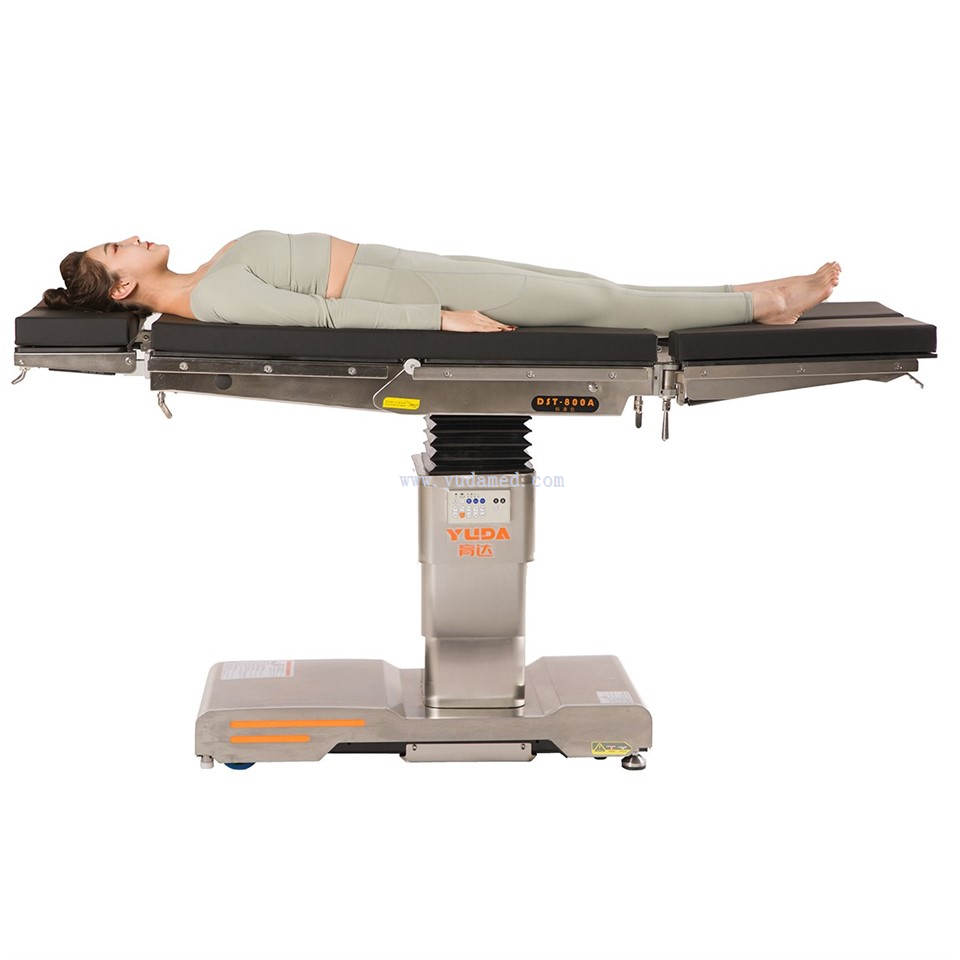
3. Consider Patient Positioning and Surgical Flexibility
Different surgical procedures require different patient positions. Therefore, flexibility is a major consideration when selecting a surgical operating table.
A versatile operating table should provide a wide range of positioning options while maintaining patient stability.
Important positioning functions may include:
Trendelenburg Position
The Trendelenburg position is commonly used in various surgical procedures where the patient's upper body needs to be positioned lower than the legs.
Reverse Trendelenburg
Reverse Trendelenburg allows the upper body to be positioned higher than the legs and may be useful for selected surgical applications.
Lateral Tilt
Lateral tilt allows the operating table to move from side to side, providing surgeons with greater flexibility during certain procedures.
Backrest and Leg Adjustment
Independent or coordinated adjustment of the backrest and leg sections allows the surgical team to achieve appropriate patient positioning for different procedures.
For hospitals that perform multiple types of surgery, a versatile operating table can provide greater value than a table designed for only one specialty.
4. Pay Attention to Patient Comfort and Pressure Management
Patient safety should be a primary consideration when purchasing a hospital operating table.
During lengthy surgical procedures, the patient may remain in the same position for an extended period. The mattress and support surfaces should therefore provide appropriate cushioning and pressure distribution.
A high-quality surgical mattress may help improve patient comfort and reduce localized pressure.
Important features to evaluate include:
Mattress thickness and density
Pressure-distribution characteristics
Waterproof and easy-to-clean surface
Secure mattress attachment
Durability
Compatibility with the operating table
Radiolucent properties, where required
For hospitals that regularly use intraoperative imaging, a radiolucent operating table can be particularly valuable.
5. Consider a Radiolucent Operating Table for C-Arm Applications
A radiolucent operating table is designed to allow X-rays to pass through the tabletop with minimal obstruction.
This feature can be important for procedures requiring C-arm or other intraoperative imaging equipment.
When selecting an operating table for orthopedic surgery, trauma surgery, pain management, or other image-guided procedures, buyers should consider:
Radiolucent tabletop design
Available imaging area
C-arm access
Tabletop dimensions
Longitudinal movement
Clearance around the base and column
A suitable radiolucent design can help improve imaging accessibility without unnecessary repositioning of the patient.

6. Evaluate Operating Table Accessories
The versatility of an operating table depends not only on the table itself but also on its accessory system.
A professional operating table supplier should be able to provide compatible accessories for different surgical applications.
Common operating table accessories include:
Arm boards
Anesthesia screens
Leg holders
Lithotomy stirrups
Head supports
Shoulder supports
Body restraints
Orthopedic traction accessories
Positioning pads
Other specialty-specific accessories
Before purchasing, confirm that the operating table has suitable side rails and attachment points for the accessories required by your hospital.
A comprehensive accessory system can make one operating table suitable for multiple surgical departments.

7. Easy Cleaning and Infection-Control Design
Infection control is another important consideration when choosing a surgical operating table.
Operating tables are exposed to blood, body fluids, disinfectants, and other contaminants during daily use. The design should therefore support efficient cleaning and disinfection.
Look for:
Smooth surfaces
Easy-to-clean materials
Removable mattress components
Water-resistant surfaces
Minimal dirt-collecting gaps
Durable construction
Materials compatible with the manufacturer's recommended cleaning agents
A hygienic operating table design can simplify routine maintenance and help operating-room staff maintain appropriate cleaning procedures.
8. Check Quality Standards and Certifications
Medical equipment buyers should carefully evaluate the manufacturer's quality management system and the regulatory requirements applicable to their market.
For international procurement, buyers may consider whether the manufacturer operates under a recognized medical-device quality management system such as ISO 13485 and whether the specific product has the certifications or registrations required in the destination market.
Depending on the country or region, applicable requirements may include CE marking, FDA requirements, or other national medical-device regulations.
Importantly, buyers should verify the specific certification and regulatory status of the individual operating table model, rather than relying only on general company-level claims.
9. Choose an Experienced Operating Table Manufacturer
Selecting an experienced operating table manufacturer can provide advantages throughout the product lifecycle.
A professional manufacturer should have:
Experienced engineering and production teams
Established quality-control procedures
Reliable component suppliers
Product testing capabilities
Technical documentation
Operating table accessories
Customization capabilities
Export experience
Spare-parts support
Technical and after-sales service
For hospitals and distributors, the manufacturer's production capability and technical support can be just as important as the initial purchase price.
10. Consider Total Cost of Ownership
The lowest purchase price does not necessarily mean the lowest overall cost.
When comparing different operating table suppliers, buyers should consider the total cost of ownership, including:
Initial purchase price
Installation
Training
Maintenance
Spare parts
Accessories
Warranty
Expected service life
Technical support
Downtime and repair costs
A reliable operating table with durable components and professional service can provide better long-term value.
Why Choose Shandong YUDA Medical Equipment Co., Ltd.?
Shandong YUDA Medical Equipment Co., Ltd. is an experienced medical equipment manufacturer specializing in operating tables and other hospital equipment.
YUDA provides operating table solutions designed for hospitals, surgical centers, medical distributors, and healthcare projects in international markets.
Depending on the model, YUDA operating tables may feature:
Strong and stable structural design
Electric or electro-hydraulic positioning
Multi-section tabletop adjustment
Trendelenburg and reverse Trendelenburg positioning
Lateral tilt
Radiolucent tabletop options
Various surgical accessories
Easy-to-clean medical-grade surfaces
Professional technical support
The company focuses on providing practical and cost-effective medical equipment solutions while supporting customers with product documentation, technical assistance, spare parts, and after-sales service.
YUDA Operating Tables for Different Surgical Applications
A modern surgical operating table should be flexible enough to support the clinical requirements of different departments.
Depending on the configuration, operating tables can be used for applications such as:
General surgery
Orthopedic surgery
Gynecological surgery
Urological surgery
Neurosurgery
Ophthalmic surgery
Trauma surgery
Minimally invasive procedures
C-arm-assisted procedures
By selecting the appropriate tabletop configuration and accessories, hospitals can build an operating-room solution suited to their specific clinical needs.
How to Select the Right Operating Table?
Before purchasing an operating table, it is recommended to create a checklist based on your hospital's actual requirements.
Consider the following questions:
1. What surgical specialties will use the table?
Identify the main procedures and departments that will use the operating table.
2. What patient weight capacity is required?
Choose a model that provides an appropriate safety margin for your expected patient population.
3. Which positioning functions are essential?
Consider height adjustment, Trendelenburg, lateral tilt, backrest, leg section, and other required movements.
4. Is C-arm imaging required?
If the table will be used with a C-arm, radiolucency and sufficient imaging access should be evaluated carefully.
5. Which accessories are needed?
Confirm compatibility with arm boards, leg holders, traction systems, head supports, and other accessories.
6. What are the local regulatory requirements?
Verify that the selected model meets the applicable medical-device requirements in your country or region.
7. What after-sales service is available?
Check warranty coverage, spare-parts availability, technical support, installation, and maintenance services.
Conclusion: Choose the Right Operating Table for Long-Term Performance
Choosing the best operating table requires a comprehensive evaluation of stability, positioning flexibility, patient support, radiolucency, hygiene, accessories, quality requirements, and after-sales service.
Whether you are looking for an electric operating table, electro-hydraulic operating table, radiolucent operating table, surgical operating table, or hospital operating table, the most suitable solution should match your clinical requirements, operating-room workflow, and long-term budget.
As an experienced operating table manufacturer and supplier, Shandong YUDA Medical Equipment Co., Ltd. is committed to providing reliable and practical surgical table solutions for healthcare facilities and medical partners worldwide.
Looking for a reliable operating table manufacturer? Contact YUDA Medical Equipment to discuss your operating table requirements and find the right solution for your operating room.